


Family-owned Company
Over 50 Years in Business
Transparent and Honest
Kind and Helpful
Moe was so kind and helpful! I needed a bracelet extended and one shortened and he helped me out so professionally and honestly. He gave me great advice of what I could do and now I can wear my jewellery with ease. Thank you so much Moe!
Erica B.

Explore Our Diamond Jewellery in Mississauga
At Gold & Time Jewellery Centre, we have a dazzling display of diamond jewellery. Come and visit us in Mississauga today.
Diamond Rings
Experience the brilliance of diamond rings crafted with timeless elegance and modern style.
Our collection features diamonds set in 10K, 14K, and 18K yellow, white, and rose gold, with platinum available upon request.
Each ring is thoughtfully designed to enhance the fire, sparkle, and natural beauty of your chosen diamond.


Available Styles
-
Solitaire Rings – Classic and elegant, showcasing a single striking diamond
-
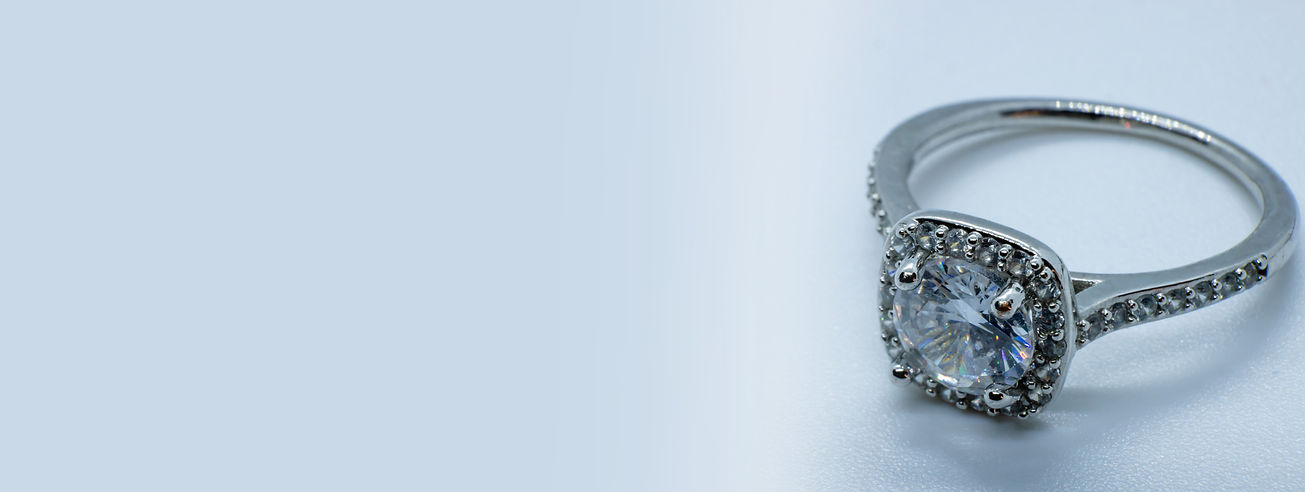
Halo Rings – A centre diamond surrounded by a circle of smaller stones for added brilliance
-
Three Stone Rings – Representing your past, present, and future
-
Eternity Bands – Diamonds encircling the band for continuous sparkle
-
Vintage Inspired Rings – Intricate details for a romantic, heirloom look
-
Modern & Minimalist Designs – Clean lines and contemporary silhouettes
Diamond Quality & Selection
We guide you through choosing the perfect diamond using the 4Cs—Cut, Colour, Clarity, and Carat—ensuring exceptional beauty and value.


Options Include
-
Natural or Lab Grown Diamonds
-
Round, Oval, Emerald, Cushion, Pear, Radiant, Marquise, Princess & more
-
Certified stones from trusted grading laboratories

Appraisal
All diamond rings include a professional certificate of appraisal completed by a certified gemologist. This documentation verifies the diamond’s authenticity, quality (4 Cs), and replacement value for insurance purposes.


The Four Cs of Diamonds: A Quick Guide
Understanding the 4Cs—Carat, Colour, Clarity, and Cut—helps you choose a diamond with the perfect balance of beauty and value.
Carat
-
Measures weight, not size.
-
Price increases at key “magic weights” (0.50, 1.00, 1.50 kt, etc.).
-
Diamonds just under these thresholds can look identical but cost less.
-
Millimetre size often gives a more accurate sense of how large a diamond appears.
-
TCW (Total Carat Weight) applies to multi‑stone settings.
Colour
-
Graded from D–Z, with D–F being colourless and most rare.
-
G–J offers excellent value with near‑colourless appearance.
-
Brighter cuts (round, oval, pear) hide colour better than step cuts (emerald, Asscher).
-
Metal choice affects appearance—white metals enhance brightness; yellow/rose gold can make slightly warm stones look whiter.
-
Natural fancy colours (pink, blue, yellow, green) are prized for rarity.
Clarity
-
Refers to internal inclusions and surface blemishes.
-
Many SI1, VS2, and some SI2 diamonds appear eye‑clean.
-
Inclusions near the edges can often be concealed by prongs.
-
Type and visibility of inclusions impact value more than quantity.
-
Flawless clarity is extremely rare.
Cut
-
The most important factor in sparkle and brilliance.
-
Well‑cut diamonds look brighter, whiter, and often larger.
-
Poor cuts lose light and appear dull.
-
Fancy shapes rely heavily on proportion and symmetry.
-
Hearts & Arrows patterns indicate top‑tier precision.
Popular Diamond Shapes
Below are some of the most loved diamond shapes—along with how they sparkle, how large they appear, and what makes each unique.
Shape
Sparkle
Level
Face-Up Size
(apparent size)
Best For
Value per Carat
Key
Features

Round Brilliant
💎💎💎💎💎
Highest
Medium
All finger shapes
⭐ Least value (highest cost)
Maximum brilliance, timeless, highest rough loss

Princess
💎💎💎💎
Medium–Large
Shorter fingers (adds slight length)
⭐⭐
Good value
Modern, geometric sparkle

Oval
💎💎💎💎
Large
Makes fingers appear longer
⭐⭐
Good value
Soft shape, hides colour well

Emerald
💎💎💎
Medium–Large
Longer fingers
⭐⭐⭐
Excellent value
“Hall of Mirrors” effect shows clarity more

Cushion
💎💎💎💎
Small–Medium
All finger shapes
⭐⭐⭐
Excellent value
Vintage appeal, strong fire

Pear
💎💎💎💎
Large
Lengthens and slims the fingers
⭐⭐
Good value
Unique teardrop silhouette

Marquise
💎💎💎💎
Largest
Best elongating effect
⭐⭐
Good value
Long, pointed ends; biggest face-up spread

Radiant
💎💎💎💎
Medium–Large
Shorter fingers (adds length)
⭐⭐
Good value
Combines Round brilliance with Emerald elegance


Natural vs.
Lab‑Grown Diamonds
What’s the difference—and which one is right for you?
Both natural and lab‑grown diamonds are real diamonds—they share the same chemical makeup, optical properties, and sparkle. The difference lies in how they’re formed and what that means for price, rarity, and personal preference.

Feature | Natural Diamonds | Lab-Grown Diamonds |
|---|---|---|
How They’re Formed | Created naturally in the earth over billions of years | Grown in a lab using advanced technology (HPHT or CVD) |
Authenticity | 100% real diamond | 100% real diamond |
Sparkle & Beauty | Identical to lab-grown; depends on cut quality | Identical to natural; depends on cut quality |
Rarity | Naturally rare; each stone is unique | Not rare; can be reproduced consistently |
Price | Higher cost due to rarity and mining | 40–70% more affordable |
Resale Value | Higher long-term resale demand | Lower long-term resale value |
Ethical / Environmental Impact | Requires mining; impact varies by sources | Considered a more sustainable, ethical option |
Best For | Heirlooms, sentimental pieces, buyers who value rarity | Bigger size for budget, ethical shoppers, value-focused buyers |
Inclusions | Natural inclusions formed over time | Lab-specific inclusions; often cleaner for price |
Certification | Graded by major labs (GIA, IGI, etc.) | Also graded by the same labs |

Which Should You Choose?
Choosing between a natural and lab-grown diamond comes down to what matters most to you.
-
Choose a Natural Diamond if you value rarity, tradition, and long-term resale strength. Natural stones carry a sense of history and uniqueness that many buyers find meaningful, especially for engagement rings and heirloom pieces.
-
Choose a Lab Grown Diamond if you want maximum sparkle for your budget, prefer an ethical or eco-friendly alternative, or love the idea of getting a larger or higher quality diamond at a more accessible price.
Both are real diamonds—same beauty, same brilliance.
The best choice is the one that reflects your style, values, and vision.


